
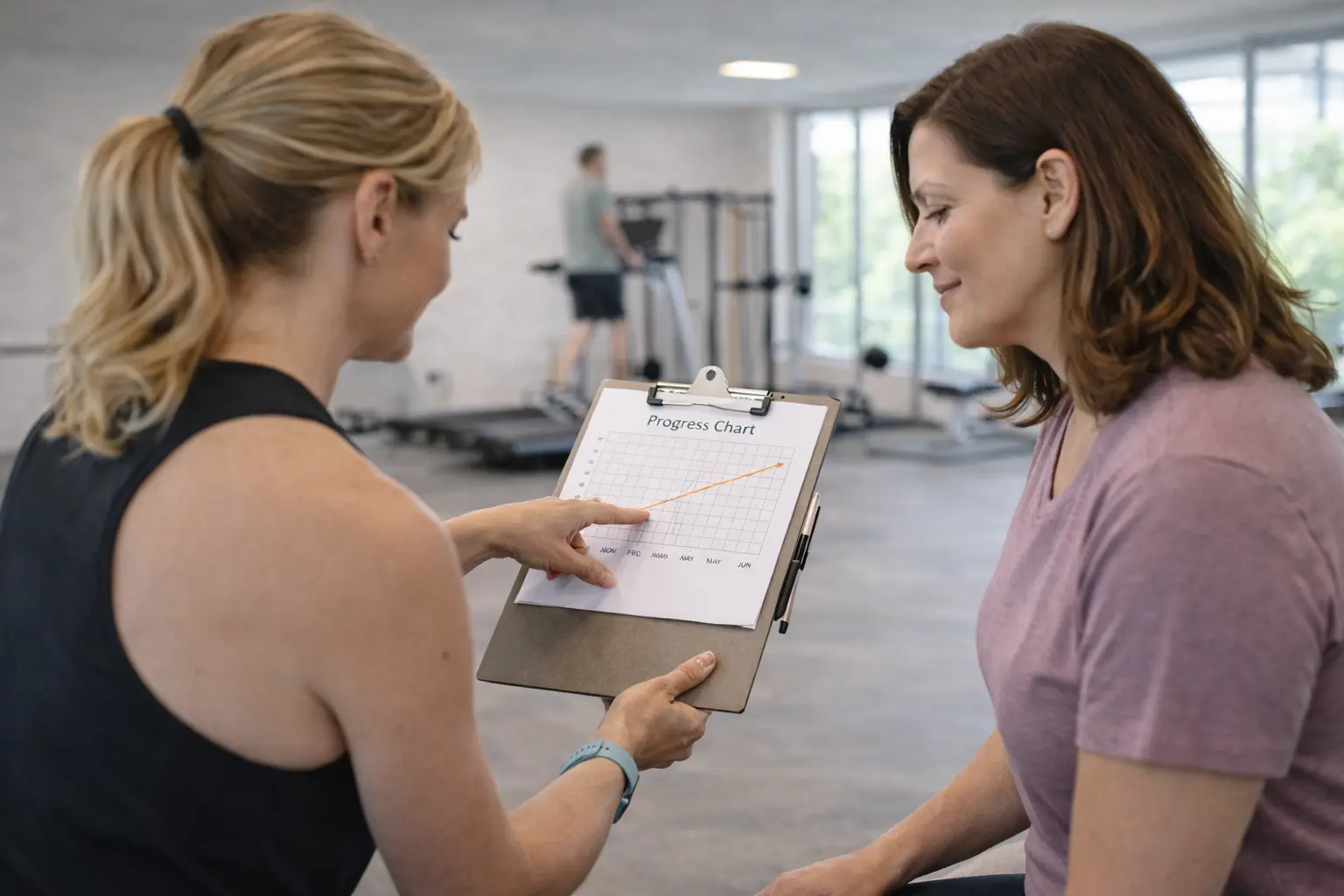
Progress does not always show up where people expect it. This guide explains how change often appears beyond the scales and how to stay consistent.
Common concerns
You may see little change on the scales while strength, stamina, or mood improves. Visual changes often take time, while better sleep or easier stairs appear sooner. It can feel like you are not doing enough, but regular moderate sessions build more than occasional hard efforts.
What this usually looks like in real life
A typical week may include two or three sessions where you repeat familiar movements and add a small amount of time or control. You might lift the same weight but feel steadier, or finish a walk with easier breathing. Daily tasks often become more comfortable over time.
Key points to keep in mind
Notice a few simple markers such as energy levels, sleep quality, and how movements feel. Make small changes one at a time so you can see what helps. Plateaus are normal, and maintaining progress during busy weeks still counts.
When to ask for support
Guidance can help if progress feels unclear, pain lingers, or you are unsure how to progress safely. Support is also useful for reassurance when progress feels slow. A calm review can keep you moving without extremes.
Progress is broader than a number on the scales; how you move and feel matters most.
If you’re unsure what applies to you, a consultation can help you decide your next step.